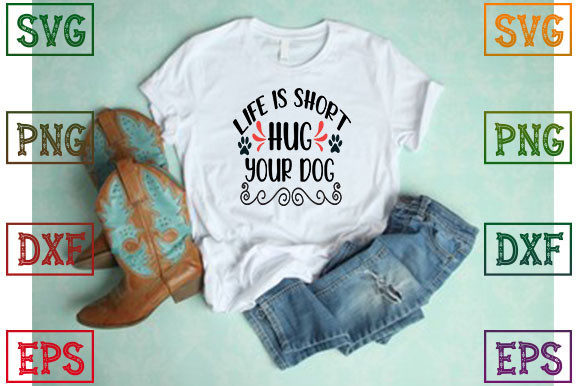
Life is Short, Hug Your Dog
A Designer’s First Look: Warm, Witty, and Ready for Stitching
When I opened the Life is Short, Hug Your Dog design, my first thought wasn’t “cute”—it was “usable.” As someone who tests dozens of typography-based embroidery files each month for client work and small-batch merchandise, I appreciate how rare it is to find a phrase-driven design that balances personality with practicality. This one lands softly but confidently: rounded, friendly letterforms; gentle spacing; no excessive flourishes or fragile serifs. It reads clearly at 3–4 inches wide—ideal for a tote bag front, sweatshirt chest placement, or baby onesie collar. It doesn’t scream. It smiles—and invites stitching.
Real Project Test: Embroidering It on a Linen-Cotton Tea Towel
Last week, I used Life is Short, Hug Your Dog for a limited-run kitchen towel set destined for a local boutique. The fabric was medium-weight linen-cotton blend—textured but stable. I chose a soft heather grey thread on off-white towel, paired with light tear-away stabilizer. The result? Clean satin-stitched letters with consistent fill density and no skipped stitches. The curve of the “g” in “Dog” held up beautifully, and the open counters (like inside the “o” and “a”) stayed legible—not clogged or overfilled. Customers responded immediately: “That’s *us*,” one said, pointing to her rescue terrier. That emotional resonance is why this works beyond decoration—it becomes part of the story customers tell themselves about their own lives and pets.
Where It Shines—and Where It Needs Thought
Life is Short, Hug Your Dog excels in relaxed, heartfelt product categories: embroidered patches for denim jackets, minimalist sweatshirt fronts, nursery pillow covers, and holiday gift tags stitched onto handmade dog bandanas. Its clean lines translate well into applique design workflows too—especially when layered over flannel or fleece. For Etsy sellers, it’s strong as a digital embroidery file bundled with matching printable mockups (think: flat-lay photos of a mug, towel, and tote all featuring the same phrase).
But let’s be real: avoid using it full-size on curved surfaces like baseball caps without testing first—the letter spacing may compress awkwardly across the crown. On thin or stretchy fabrics (like lightweight jersey tees), reinforce with cut-away stabilizer and consider reducing stitch density slightly to prevent puckering. And if you’re planning dark fabric applications, preview the PNG with transparent background in black-and-white mode first: some subtle weight shifts in the letterforms become more visible there, and you’ll want to confirm contrast holds up.
Design Integrity Meets Commercial Practicality
This isn’t just a T-Shirt Designs graphic dropped into an embroidery workflow—it behaves like a purpose-built machine embroidery design. The vector files (SVG, EPS, DXF) scale cleanly for resizing without distortion, and the PNG with transparent background makes quick mockup generation painless. That matters when you’re juggling five craft fair deadlines or prepping listings for a seasonal Etsy drop.
I’ve seen similar phrases fail in production because tiny details—like the tail of the “y” or inner curve of the “d”—disappear under dense fill stitch or get lost on textured terrycloth. Not here. The design’s visual personality stays intact whether stitched at 2.5 inches on a child’s bib or stretched to 5 inches on a blanket edge. That consistency builds customer trust: buyers recognize your brand voice across products, and they feel confident gifting something that looks professionally finished—not “designed in Canva and stitched on a whim.”
Practical Notes Every Embroidery Designer Should Check
- Test on scrap fabric first—especially if pairing with textured or blended fabrics common in handmade product lines.
- Review thread color contrast before finalizing: warm greys and oatmeals pop nicely, but true black on navy can blur detail unless stitch density is dialed in.
- Confirm hoop size compatibility: while the layout fits standard 4×4 hoops comfortably, double-check the outer dimensions if scaling beyond 4.5 inches.
- Inspect small details at actual stitch size: zoom in on the “i” dot and crossbar junctions—clean intersections mean fewer thread breaks and smoother runs.
- Use proper stabilizer for your base fabric—not just “some,” but the right type (tear-away for stable wovens, cut-away for knits, fusible for lightweight linens).
- Verify licensing terms before selling finished items or reselling the digital embroidery file—this is a Graphics asset, not automatically commercial-use by default.
Why It Fits So Many Creative Businesses
For craft business owners building cohesive collections—say, a “Pet Parent Series” including mugs, totes, and embroidered pet beds—Life is Short, Hug Your Dog anchors the theme without feeling repetitive. Its warmth reads authentically on baby embroidery (think: organic cotton swaddle labels), yet its clean structure supports professional presentation on boutique aprons or café staff uniforms. Even holiday embroidery benefits: stitch it onto velvet ribbon for dog-themed stocking tags, or pair it with simple paw-print motifs on felt ornaments.
What sets it apart from generic dog-themed graphics is restraint. There are no cartoon bones, no paw prints crowding the message, no forced whimsy. Just honest, warm typography that feels handmade—not mass-produced. That distinction elevates perceived value, strengthens brand consistency, and encourages repeat engagement: customers don’t just buy a towel—they remember how the phrase made them feel when they saw it stitched beside a sleeping pup on Instagram.
Final Thought: A Phrase That Stitches Well—and Sells Well
Life is Short, Hug Your Dog earns its place in my working library not because it’s trendy, but because it’s reliable. It performs across fabric types, scales gracefully, respects the limits of home and small-shop embroidery machines, and connects emotionally without leaning on cliché. Whether you’re an Etsy seller launching your first embroidered patch line, a custom apparel decorator building client portfolios, or a hobbyist stitching gifts for fellow dog lovers—this is one of those rare design assets that does the quiet, consistent work of making handmade products feel both personal and polished.